Commercial Storm Damage in Gaston, IN
Commercial storm response across Gaston, IN, with the roof secured first and the interior dried underneath it.
Gaston Water Restoration delivers Commercial Storm Damage across Gaston and surrounding areas with certified crews available 24/7 and every step documented for insurance. Call (812) 515-1567.
- Service: Commercial Storm Damage for Gaston homeowners
- Service area: Gaston, IN and surrounding areas
- Response time: Same day emergency response for Gaston; 24/7 availability
- Licensed and insured (License #RC21100059)
- Serving Gaston, IN since 2018
Commercial Storm Damage Cleanup in Gaston
We'll secure and dry commercial buildings in Gaston after a storm opens the roof or floods a lower level.
Storms Here
Spring and summer are severe thunderstorm season here. Large hail and damaging wind can hit here, and that puts roofs and rooftop equipment at risk. NWS Indianapolis posts summaries of past storms, which helps when your carrier asks for a date.
We respond to storm calls from businesses anywhere in Gaston, including those around Mill Street Inn and Wes-Del Elementary School. We also handle commercial storm damage in Albany, Yorktown, Daleville and Selma.
Commercial Storm Damage for Gaston Businesses
Tenants upstairs are open for business while the lobby floor below them is wet, and visitors still need a clear route in. That shapes the first visit to your Gaston property as much as the water does. Gaston Water Restoration extracts the lobby and sets barriers at a natural line, with a dry path marked so the building keeps operating around the work.
A thermal camera points the crew toward cooler surfaces that may be wet, and a moisture meter confirms which ones are. Scope lines come from meter readings and from what the crew sees through open inspection holes. The camera images are kept too, because they show the outline of the wet area on the day your Gaston floor plan was marked up.
Contents at your Gaston property move ahead of extraction. Stock sitting on a wet floor gets lifted onto blocking or carried to dry ground, starting with whatever absorbs water fastest, such as cardboard and paper. Equipment that can't be moved gets wrapped in plastic. Gaston Water Restoration lists what moved and where it went, which gives each tenant a record to attach to its own claim.
Many commercial property forms cover rain that gets inside only when wind or hail first damaged the roof or an exterior wall where the water entered. That makes the point of entry the first thing a reviewer looks at. Gaston Water Restoration photographs the interior side of it at your Gaston building and dates the images, and your broker can tell you how your own form reads.
Storms hit on weekends and holidays, and the water in your Gaston building keeps spreading until someone dries it. Gaston Water Restoration takes commercial calls at any hour, so call when you find the problem and tell the team what you see.
Signs You Need Commercial Storm Damage Restoration
If you notice any of these in your Gaston building, schedule a free inspection before the issue worsens.
Floor boxes near the glass line with corrosion or standing water inside
Insulation batts above the ceiling grid that are compressed, matted, or dripping at the edges
Water dripping from a light fixture, an air diffuser, or a sprinkler escutcheon after a hard rain
Stains that start at the top floor and reappear on the same wall two floors down
A supply diffuser dripping water or showing rust streaks after a storm
Rust streaks or white efflorescence running down an interior wall below a parapet line
A musty, earthy smell at a return air plenum or coming out of a corridor diffuser
Interior wall base swelling, delaminating, or pulling away from the gypsum behind it
Window sills or curtain wall mullions holding water on the inside face after wind driven rain
Ceiling tiles sagging, stained brown at the center, or crumbling along the grid in one area of a floor
How Gaston Water Restoration Handles Commercial Storm Damage
We follow these steps in order on every Gaston job.
First Call Intake
On the call, the team gathers where the water is entering, which areas are occupied, who holds keys and alarm codes, and who can authorize work, so the crew shows up at your Gaston property with the right equipment and the access it needs.
Power and Safety Walk
Before extraction starts, the crew walks the wet areas with your building engineer and confirms which circuits serve them. Cords run through ground fault protection, and the electrician decides what can be reenergized.
Contents and Inventory Protection
Stock and equipment on wet floors get lifted onto blocking or moved to dry ground, with plastic over anything that has to stay. A photo list records what moved and where, which supports each tenant's own claim.
Moisture Mapping
Every affected space gets walked with thermal imaging and both penetrating and nonpenetrating meters. Readings are keyed to a floor plan by room or column line, so the scope covers where the water went and leaves dry areas alone.
Closeout File and Walkthrough
A walkthrough with the property manager closes the job, and the crew hands over one organized file with the photos, the readings, the equipment run hours and the scope. Ownership and the carrier's reviewer can read it start to finish.
Commercial Storm Damage in Gaston
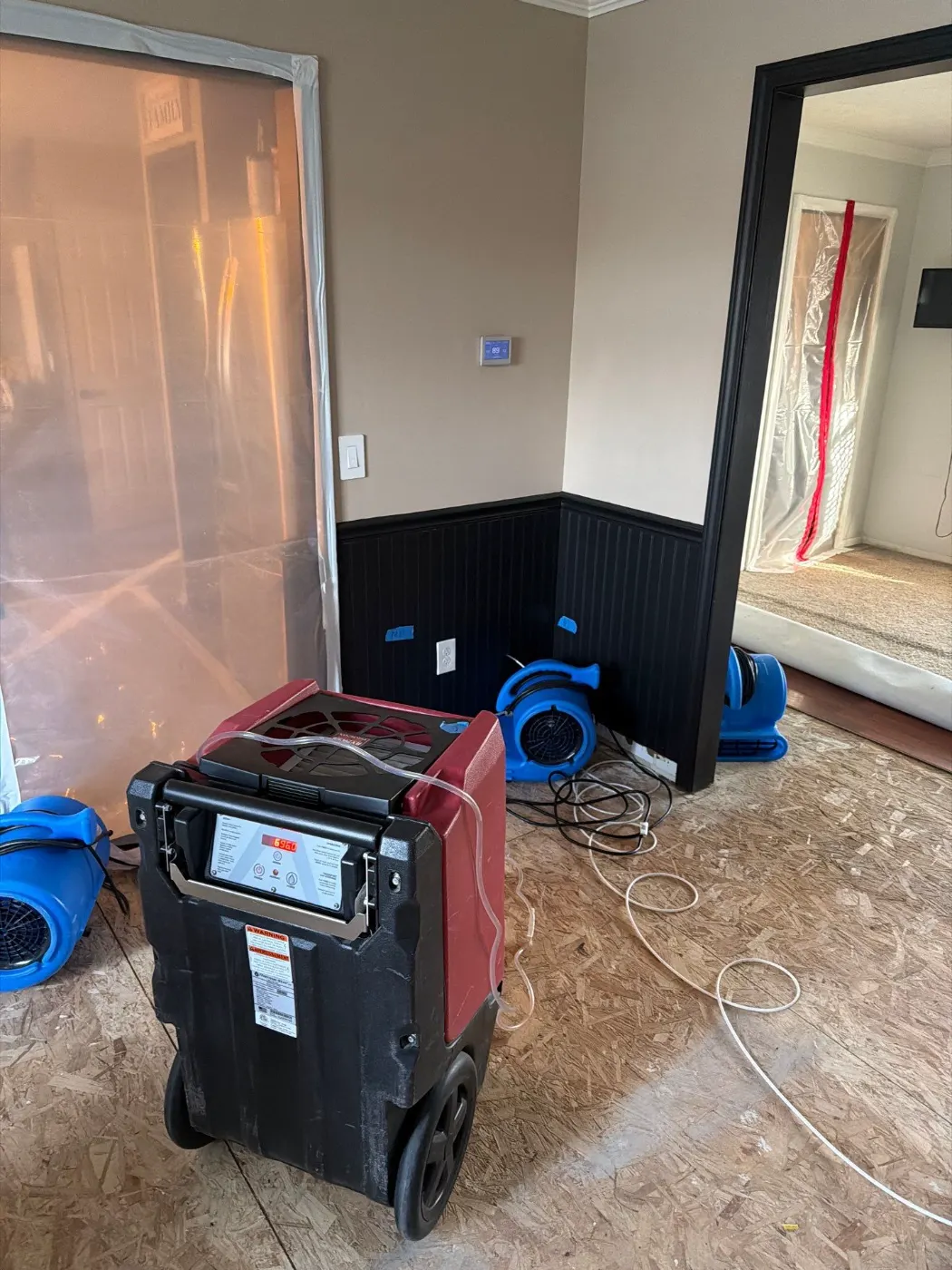
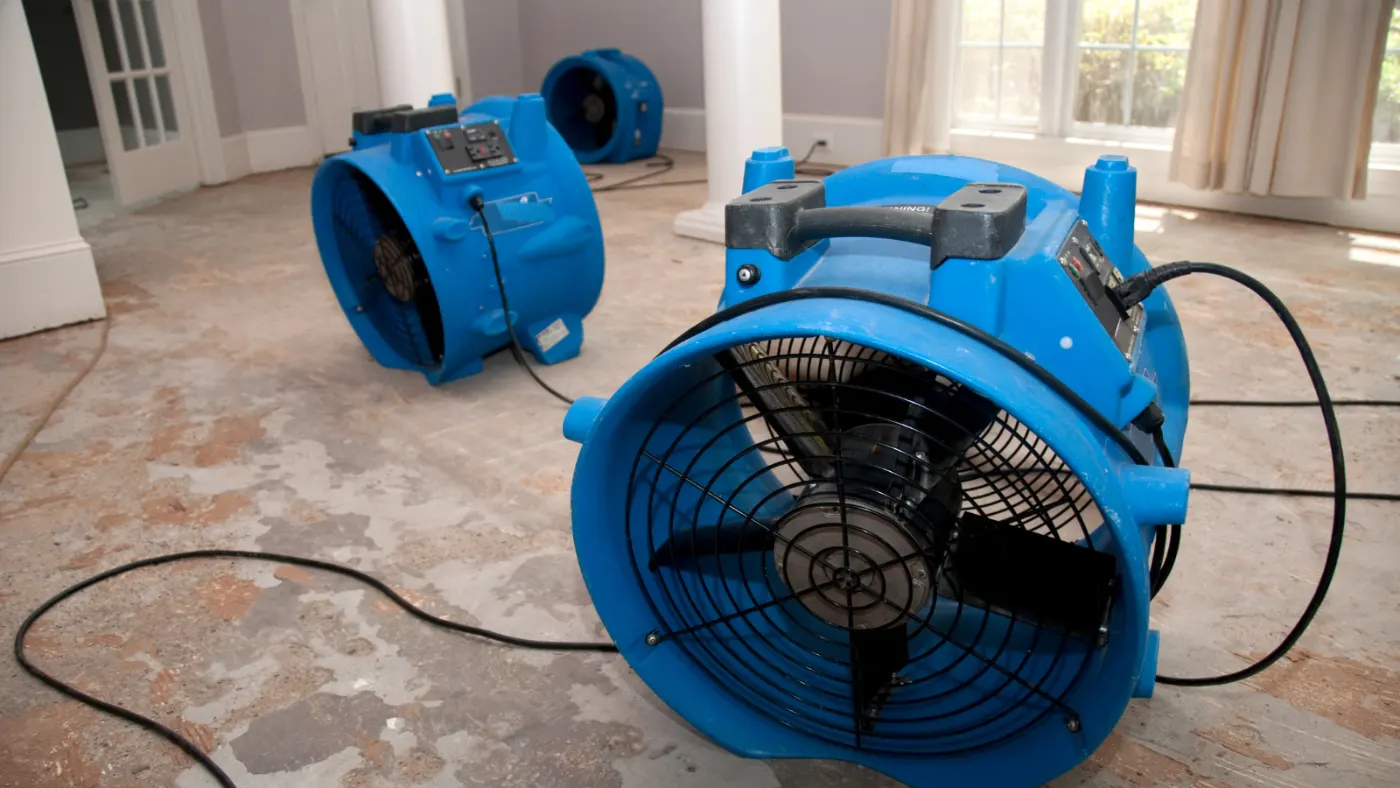
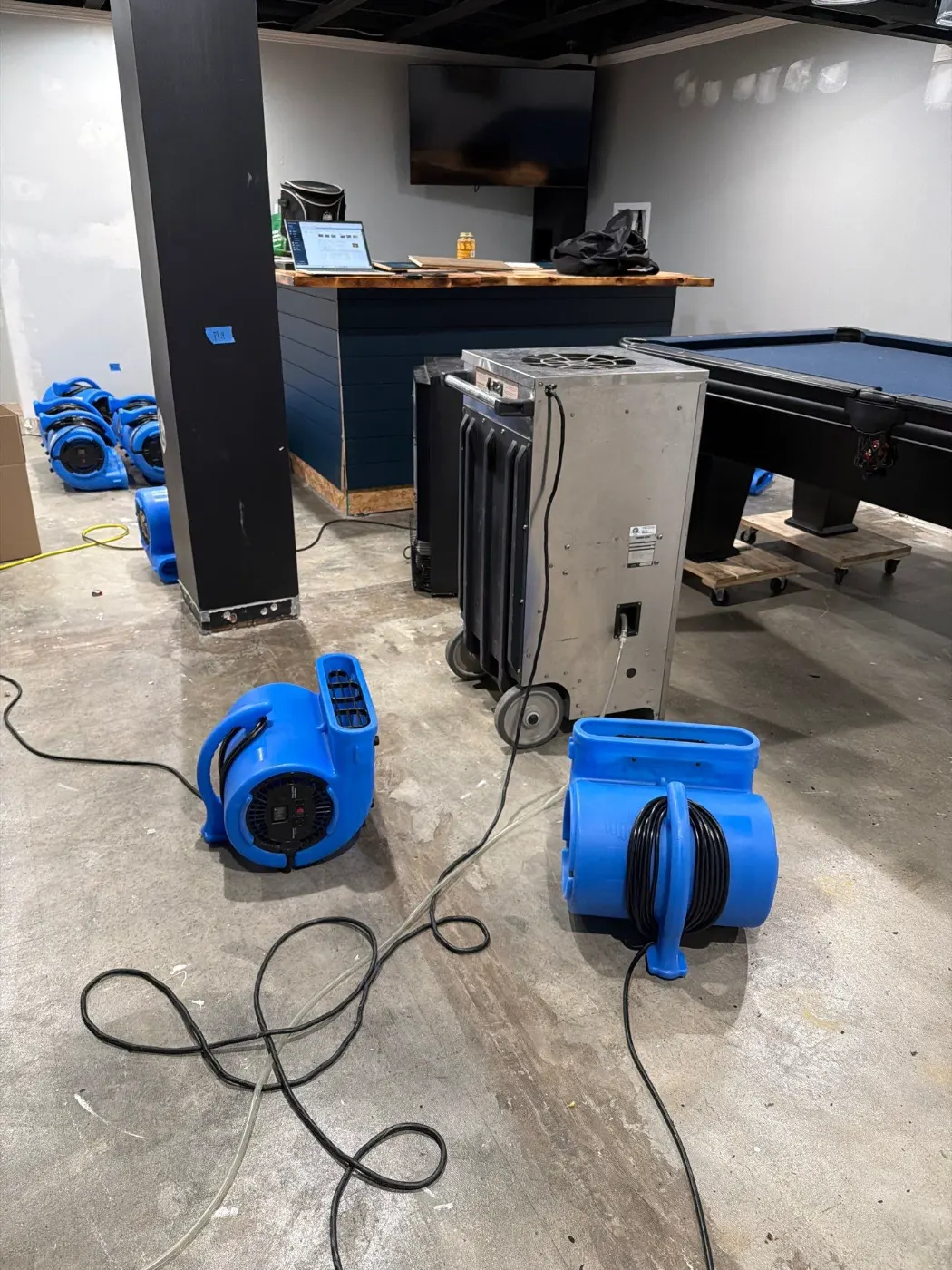
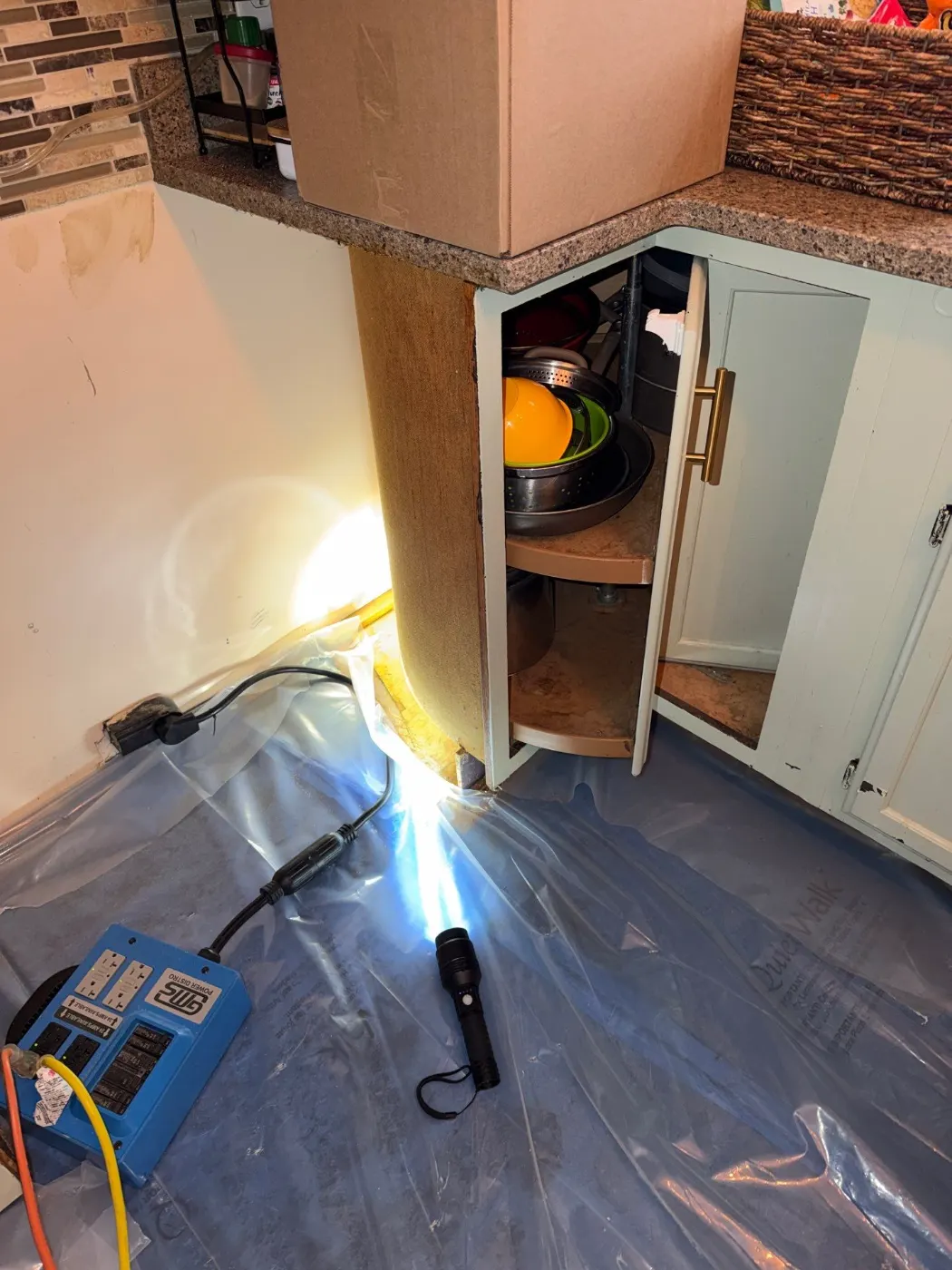
Photographs from real commercial storm damage jobs completed by our crew in Gaston and surrounding areas.
Commercial Storm Damage FAQ
Questions Gaston property managers ask us about commercial storm damage restoration.
Guidance and Standards for Commercial Storm Damage
- The National Weather Service office in Indianapolis posts summaries of recent central Indiana storm and flood events. NWS Indianapolis Event Summaries
- The ANSI/IICRC S500 is the published standard for professional water damage restoration. The current edition is the Fifth Edition, 2021. IICRC S500 Standard
Gaston Neighborhoods We Serve
We take commercial storm damage calls in every part of Gaston. Pick your neighborhood for local details.
Other Restoration Services in Gaston
Gaston Water Restoration handles the full scope of restoration work. Explore our other services below.
Water Damage Restoration in Gaston
24/7 emergency response. IICRC certified water restoration from extraction to full dry out.
Learn more →Basement Flooding in Gaston
Basement water emergencies handled fast. Extraction, drying, mold prevention.
Learn more →Sewage Cleanup in Gaston
Category 3 biohazard cleanup. Full containment, decontamination, structural restoration.
Learn more →Request Commercial Storm Damage Restoration
Reach Us Directly
Our team is available 24/7 for emergencies and ready to schedule inspections during business hours.
Need Immediate Help?
For active water or mold emergencies, call us directly. We are available 24/7.